CNMI
Last updated 17 July, 2026
Commonwealth of the Northern Mariana Islands
Disclaimer
At the time of writing, I've never actually been to the CNMI. I'm not an expert, I am more of an oddly interested fan of the place. While I've tried to be accurate, I wouldn't bet that every detail is completely correct. Please verify anything important before relying on it.
Background
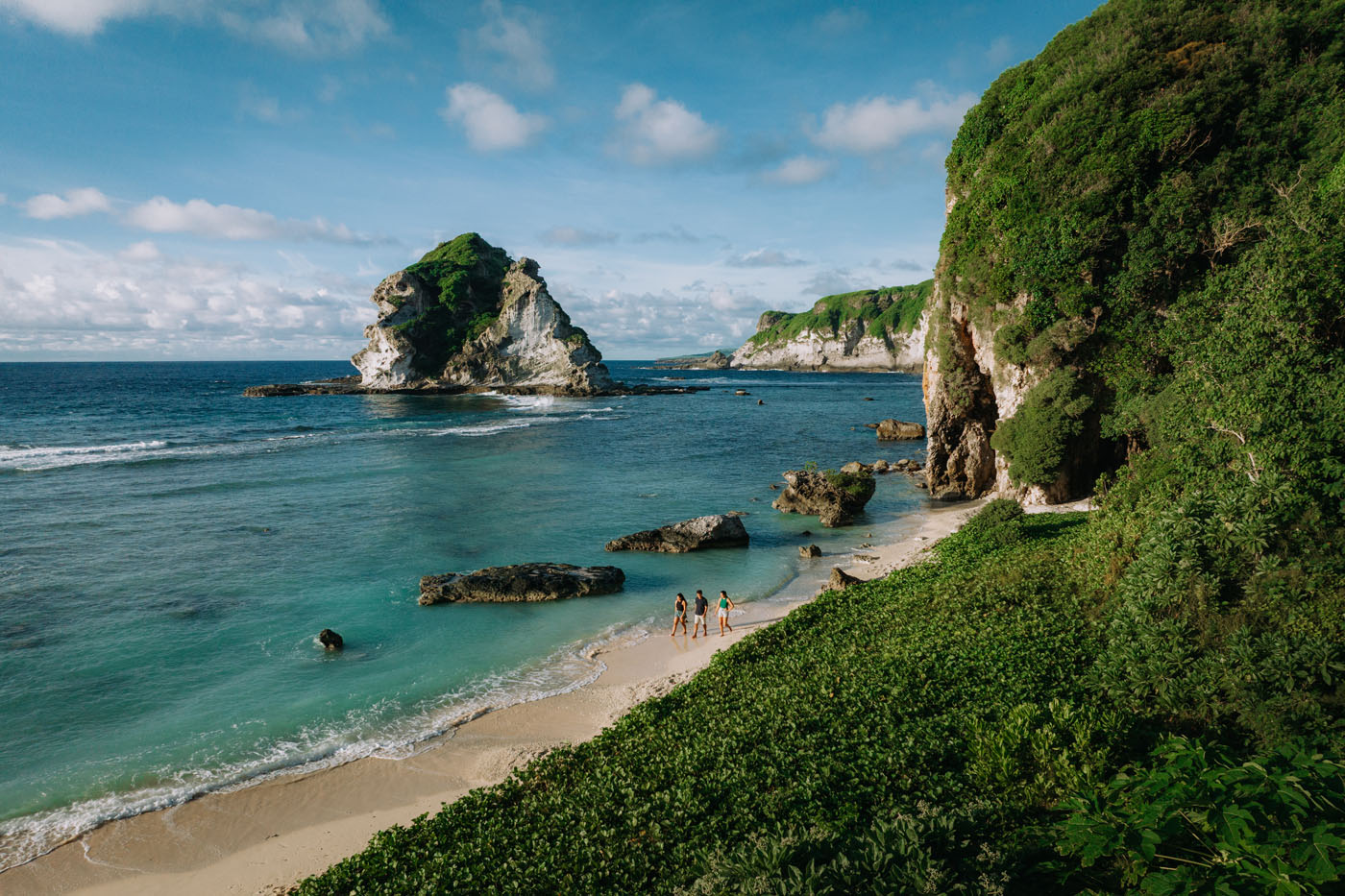
The Commonwealth of the Northern Mariana Islands (CNMI) is a little-known territory of the United States. It consists of a chain of small islands in the western Pacific, just north of Guam. Nearly all of its 44,000 residents live on the largest island, Saipan, which is about the same size as the city of San Francisco.
It has a pleasant tropical climate, with year-round temperatures typically in the mid-70s at night and the mid-80s during the day. However, there is an unfortunate tendency for catastrophic typhoons to eviscerate the economy about once a decade.
Life on Saipan is perhaps best imagined as life in a small American town, but in the middle of the Pacific and with a strong Asian influence. It is a car-oriented island of suburban neighborhoods, shopping centers, and small businesses. Like any small town, it doesn't offer the same variety of stores, restaurants, and services as a major city. Unlike most small towns though, there's no nearby metropolis to fill in the gaps.
It entered into political union with the US during the 1970s. Its commonwealth government began operating in 1978, and the arrangement became fully effective in 1986, when most residents became US citizens. Today, about 60% of the population are US citizens or permanent residents, while 40% are foreign workers and their families.
The two indigenous ethnic groups, the Chamorros and Carolinians, together make up about 30% of the population. Almost everyone else traces their roots somewhere else in Asia, with Filipinos by far the largest group. Many residents speak another language at home, but English is the language used in public life, both formally and casually.
The CNMI is also legally a little unusual. Under the covenant that established the commonwealth, parts of the US Constitution apply differently than they do in the states. Only people of Northern Mariana Islands descent are legally allowed to own land. The islands were once exempt from the federal minimum wage and, until 2009, ran their own immigration system.
Federal immigration law applies today, but the transition left behind a handful of CNMI-specific exceptions. The territory still has its own temporary-worker visa, the CW-1, and employers there can hire H-1B workers without going through the usual national cap. Both exceptions are currently scheduled to disappear after 2029, despite an economy that remains heavily dependent on foreign workers. Nobody seems entirely sure what happens then.
Its tax system is equally unusual. It officially uses a mirror of the federal income tax code used on the mainland. But in practice, a rebate system returns much of that tax to residents, giving many taxpayers some of the lowest effective tax burdens available anywhere under the US flag.
These legal and economic quirks, combined with its geography and close ties to Asia, make the CNMI unlike any other part of the United States. Despite that, it remains one of the country's least-known places.
The Rest
This note is an unfinished work in progress, and I'll continue adding to it over time.
I've become interested in the CNMI because it seems like a place that could be doing much better than it is. Under the right conditions, it could be among the best places to live under US jurisdiction.
I don't know what those conditions are, or how realistic it is to create them. This note will be my attempt to understand how the CNMI arrived where it is today, what opportunities remain, and what a more prosperous future for the islands might look like.